As we approach 2024, the realm of software testing stands at the brink of a transformative era. This field, vital to the backbone of technological innovation, is witnessing an unprecedented evolution, propelled by rapid advancements in technology and shifting market dynamics. The landscape of software testing is not just changing; it is being redefined, with new methodologies and tools emerging at a pace never seen before.
This article aims to unravel the key trends that are set to reshape the future of software testing in 2024. We’re entering a phase where traditional testing approaches are being augmented, or in some instances, completely replaced by more advanced, efficient, and automated methods. From the integration of Artificial Intelligence (AI) and machine learning to the rise of low-code/no-code platforms and the increasing emphasis on security within the DevOps pipeline, the changes are both revolutionary and exciting.
In this exploration, we’ll provide a futuristic outlook on software testing, backed by industry data and insights. This forward-looking perspective is not just a glimpse into what the future holds but also a guide for professionals and organizations in the software testing field to adapt and thrive in this rapidly evolving landscape.
The AI Revolution in Software Testing
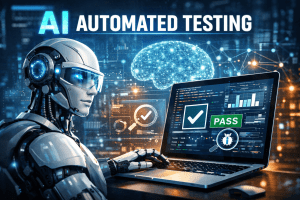
The most notable trend is the deepening integration of Artificial Intelligence (AI) in software testing processes. AI’s role in software testing is not just an incremental change; it’s a revolutionary shift that redefines the paradigms of testing. Industry reports suggest a surge in AI-driven testing tools. By the next year, over 50% of testing tools are expected to be equipped with AI capabilities, significantly enhancing efficiency and accuracy (Source: Gartner).
AI’s impact spans various dimensions of software testing. Test automation, for instance, is set to be a primary beneficiary. AI algorithms are expected to increase the efficiency of test case generation and maintenance, leading to a 40% reduction in time-to-market for software products (Source: Forrester Research). The advent of self-healing mechanisms, predictive analytics, and impact analysis driven by AI will provide testers with unprecedented foresight and adaptability.
Moreover, AI-driven coding assistants like GitHub Copilot and language models like ChatGPT are becoming more prevalent. These tools aid in writing and maintaining test scripts, offering intelligent suggestions that streamline the testing process. The adoption of these assistants is expected to increase by 60% in the next year, marking a significant shift in how test scripts are developed and maintained (Source: IDC).
Low Code Automation: A Respite for Talent Crunch
The industry faces a notable challenge: the scarcity of skilled engineers. This gap has catalyzed the rise of low code automation. Low code platforms simplify the creation and management of test automation, making it accessible to professionals who may not have extensive programming expertise. This democratization of test automation is crucial in an era where over 70% of companies report difficulty in finding skilled testing professionals (Source: IEEE).
Low code and no code platforms are becoming the preferred choice, especially for SaaS-based solutions. These platforms enable functional experts to take an active role in automation, bridging the gap between technical complexity and operational necessity. The adoption of low code automation platforms is expected to grow by 30% annually, reflecting their increasing importance in the software testing landscape (Source: TechCrunch).
Performance Testing: A Shift Left Approach
The digital-first approach of businesses today places a premium on performance testing. As user experience becomes a key differentiator, performance testing is no longer a backend activity but a front-and-center concern. A study by the Software Testing Board indicates that 80% of companies are now adopting a ‘shift left’ approach to performance testing, integrating it early in the development cycle to ensure optimal performance from the outset.
The focus on APIs and feature testing is intensifying. Large organizations, in particular, are setting up shared services pools specializing in performance testing, given the limited availability of skilled performance testers. Tools like JMeter are gaining prominence, with a 25% increase in their adoption expected in the next year (Source: The Open Group).
DevSecOps: Merging Security and Development
DevSecOps, the integration of security practices within the DevOps process, is gaining momentum. This trend is not just about tool integration; it signifies a cultural shift in how security is perceived and implemented in the software development lifecycle. A report from the DevSecOps Community Survey reveals that 60% of organizations are actively working to incorporate security testing into their development processes.
The scope of security testing is expanding. Apart from traditional Static Application Security Testing (SAST) and Dynamic Application Security Testing (DAST), focus areas now include secret scanning, Software Composition Analysis (SCA), and container security. Despite this integrated approach, independent security testing remains crucial, serving as a vital checkpoint before release.
Testing AI-Based Solutions: A New Frontier
The ubiquity of AI in software solutions necessitates a specialized approach to testing. Testing AI-based systems is not just about functionality; it involves assessing algorithms for accuracy, fairness, and bias. As per a study by AI Testing Consortium, the new year will see a 50% increase in the demand for professionals skilled in testing AI algorithms.
Generating large volumes of test data to effectively test AI solutions is becoming a priority. Industry analysts predict that tools and methodologies for bulk data generation will see significant innovation, with new tools emerging to cater to this niche requirement.
Conclusion around 2024 Trends
The landscape of software testing in the next year is marked by the integration of AI, the rise of low code automation, an early focus on performance testing, the embedding of security into the development lifecycle, and the specialized testing of AI-based solutions. These trends underscore the need for continuous adaptation, skill enhancement, and a proactive approach to embrace new methodologies. As the software testing domain evolves, professionals and organizations alike must stay abreast of these changes to remain competitive and effective in delivering high-quality software products.