In today’s digital landscape, where cyber threats are becoming increasingly sophisticated, it is essential for businesses to prioritize the security of their systems and data. One crucial aspect of ensuring robust security is conducting thorough and regular security testing. By identifying vulnerabilities and weaknesses in your systems, you can take proactive measures to strengthen your defenses. In this guide, we will explore the importance of security testing tools, common security vulnerabilities, and provide an overview of the top tools for security testing available for this purpose.
Importance of Security Testing
With the rise in cybercrime and data breaches, security testing has become a critical element for businesses of all sizes. The consequences of a security breach can be devastating, ranging from financial losses to reputational damage. Security testing helps organizations identify vulnerabilities and weaknesses in their systems before they can be exploited by malicious actors. By conducting regular security testing, businesses can stay one step ahead of potential threats, ensuring the integrity, confidentiality, and availability of their systems and data.
Common Security Vulnerabilities
Before delving into the top tools for security testing, it is essential to understand the common security vulnerabilities that these tools aim to detect and mitigate. One such vulnerability is cross-site scripting (XSS), where attackers inject malicious scripts into web pages viewed by unsuspecting users, compromising their data or taking control of their accounts. Another prevalent vulnerability is SQL injection, where attackers manipulate a web application’s database by inserting malicious SQL statements. Other common vulnerabilities include insecure direct object references, cross-site request forgery, and insecure cryptographic storage.
Overview of Security Testing Tools
Security testing tools come in various forms, each designed to detect and address specific vulnerabilities and weaknesses. These tools automate the testing process, saving time and effort while ensuring comprehensive coverage. Some tools specialize in web application security testing, while others focus on network vulnerability scanning. Additionally, there are tools that perform code analysis to identify security flaws in the underlying codebase. By utilizing a combination of these tools, businesses can create a robust security testing framework.
Types of Security Testing Tools
When it comes to security testing, different tools cater to different aspects of the process. Vulnerability scanners, such as Nessus and OpenVAS, are instrumental in identifying weaknesses in network infrastructure, scanning for open ports, and checking for outdated software versions. Web application security scanners, such as OWASP Zap and Burp Suite, help identify vulnerabilities in web applications, including XSS, SQL injection, and insecure direct object references. Code analysis tools, such as Fortify and SonarQube, analyze the source code for security flaws and provide recommendations for remediation.
Criteria for Choosing Security Testing Tools
Selecting the right security testing tools requires careful consideration of various factors. Firstly, the tool should align with your specific requirements and the nature of your systems and applications. It should be compatible with your technology stack and provide accurate and reliable results. The tool’s ease of use, documentation, and support are also crucial factors to consider. Additionally, the tool should receive regular updates and have an active community to ensure it stays up-to-date with emerging threats. Finally, budgetary considerations should be taken into account, as some tools may require a significant investment.
Top Security Testing Tools for Different Purposes
Now that we have discussed the importance of security testing and the different types of tools available, let’s explore some of the top security testing tools for various purposes.
Network Vulnerability Scanners
- Nessus: A widely used vulnerability scanner that helps identify weaknesses in network infrastructure and provides comprehensive reports, prioritizing vulnerabilities based on severity.
- OpenVAS: An open-source vulnerability scanner that scans for open ports, checks for outdated software, and assists in identifying network vulnerabilities.
Web Application Security Scanners
- OWASP Zap: An open-source web application scanner that allows for manual and automated security testing, providing detailed reports on vulnerabilities.
- Burp Suite: A comprehensive web application security testing tool that combines automated scanning with manual testing capabilities, offering features like intercepting proxy and site crawler.
Code Analysis Tools
- Fortify: A static code analysis tool that scans the source code for security vulnerabilities, providing detailed reports with recommended fixes.
- SonarQube: A platform that performs static code analysis, detecting security issues, bugs, and code smells, while also measuring code quality and providing continuous feedback.
Comparison of Popular Security Testing Tools
To choose the right security testing tools, it is essential to compare their features, capabilities, and suitability for your specific requirements. Consider factors such as ease of use, scalability, reporting capabilities, and integration with existing systems and workflows. Additionally, evaluate the level of community support and the tool’s track record in terms of performance and reliability.
Tips for Using Security Testing Tools Effectively
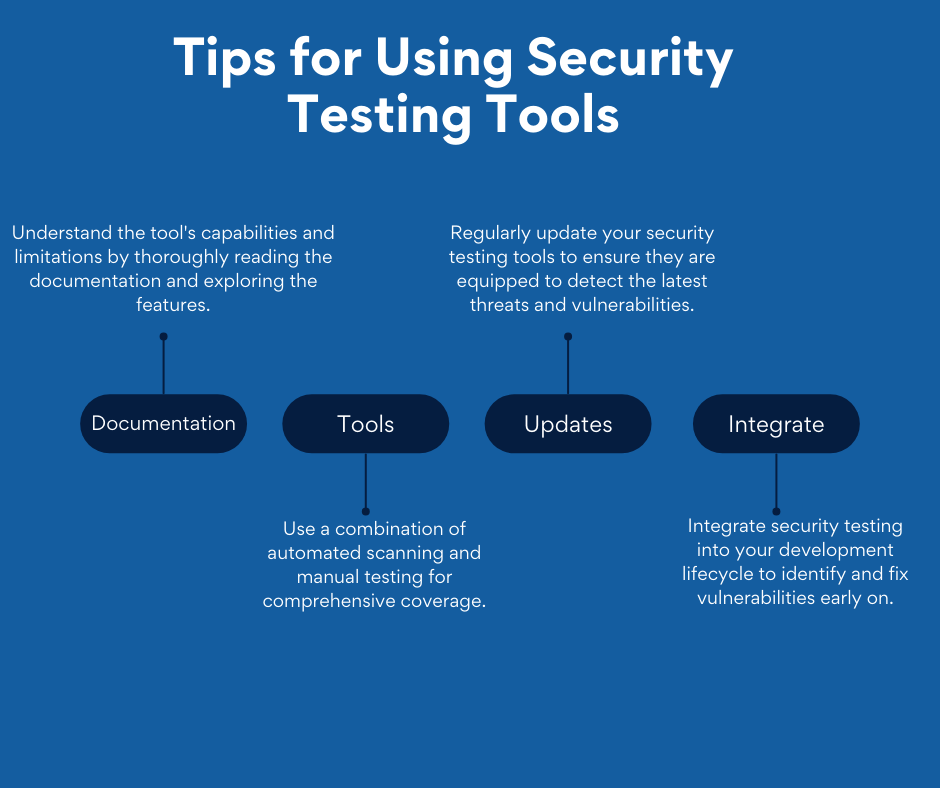
While security testing tools can greatly enhance the security of your systems, it is important to use them effectively to maximize their benefits. Here are some tips to help you get the most out of your security testing tools:
- Understand the tool’s capabilities and limitations by thoroughly reading the documentation and exploring the features.
- Use a combination of automated scanning and manual testing for comprehensive coverage.
- Regularly update your security testing tools to ensure they are equipped to detect the latest threats and vulnerabilities.
- Integrate security testing into your development lifecycle to identify and fix vulnerabilities early on.
Conclusion and Recommended Resources
In conclusion, security testing plays a vital role in safeguarding your organization’s systems and data from potential threats. By utilizing the top tools available for security testing, businesses can identify vulnerabilities and weaknesses, enabling them to take proactive measures to strengthen their defenses. Remember to choose tools that align with your specific requirements, and use them effectively by following best practices. Strengthen your defenses today and protect your assets from cyber threats.
Recommended Resources:
- OWASP Testing Guide
- NIST SP 800-115: Technical Guide to Information Security Testing and Assessment
- SANS Security Testing Methodology
FAQ: Security Testing Tools
1. What is security testing, and why is it important?
Security testing is the process of identifying vulnerabilities, weaknesses, and potential threats in software applications, networks, and systems. It is essential because it helps organizations prevent data breaches, protect sensitive information, and comply with security regulations. Regular security testing reduces the risk of cyberattacks and ensures system integrity.
2. What are the different types of security testing tools?
Security testing tools can be categorized based on their functionality:
- Network vulnerability scanners – Identify security gaps in network infrastructure (e.g., Nessus, OpenVAS).
- Web application security scanners – Detect vulnerabilities like XSS and SQL injection in web applications (e.g., OWASP Zap, Burp Suite).
- Code analysis tools – Analyze source code for security flaws (e.g., Fortify, SonarQube).
- Penetration testing tools – Simulate real-world attacks to assess system security (e.g., Metasploit).
- Cloud security testing tools – Assess security risks in cloud environments (e.g., Prisma Cloud, AWS Inspector).
3. How do vulnerability scanners work?
Vulnerability scanners identify security weaknesses by scanning systems, networks, or applications for known vulnerabilities. They generate reports highlighting issues such as outdated software, open ports, and misconfigurations. These tools help security teams prioritize and remediate threats before they can be exploited.
4. What is the difference between static and dynamic security testing tools?
- Static Application Security Testing (SAST) examines source code, bytecode, or binary code for security vulnerabilities without executing the application. Example tools: Fortify, SonarQube.
- Dynamic Application Security Testing (DAST) analyzes running applications to identify real-time vulnerabilities, such as injection flaws and authentication issues. Example tools: OWASP Zap, Burp Suite.
5. How do web application security scanners improve cybersecurity?
Web application security scanners detect and analyze security vulnerabilities in web-based applications, such as:
- Cross-site scripting (XSS)
- SQL injection
- Insecure authentication and session management
- Security misconfigurations
By using these tools, organizations can identify and address security gaps before attackers exploit them.
6. What are some best practices for using security testing tools effectively?
To maximize the effectiveness of security testing tools:
- Regularly update tools to detect emerging threats.
- Use both automated and manual testing for comprehensive coverage.
- Integrate security testing into the development lifecycle.
- Review and analyze reports carefully to prioritize critical vulnerabilities.
- Follow security best practices recommended by organizations such as OWASP and NIST.
7. How can organizations choose the right security testing tool?
When selecting a security testing tool, consider the following factors:
- Compatibility with existing technology stack
- Coverage of vulnerabilities and testing methodologies
- Ease of use and integration with security workflows
- Reporting and remediation capabilities
- Community support and regular updates
8. What is penetration testing, and how does it differ from vulnerability scanning?
Penetration testing is a simulated cyberattack conducted by ethical hackers to evaluate system security. It differs from vulnerability scanning in that penetration testing involves actively exploiting vulnerabilities to assess the impact, while vulnerability scanning only identifies potential weaknesses.
9. What are some common security vulnerabilities that security testing tools detect?
Security testing tools help identify vulnerabilities such as:
- Cross-Site Scripting (XSS)
- SQL Injection
- Insecure authentication and session management
- Broken access controls
- Security misconfigurations
- Insecure cryptographic storage
10. How often should security testing be performed?
Security testing should be conducted regularly, including:
- Before deploying a new application or system
- After any significant code updates or changes
- Periodically as part of routine security assessments
- In response to emerging threats and vulnerabilities
11. What tool is used for security testing?
Popular security testing tools include OWASP ZAP, Burp Suite, Nessus, Nmap, and Metasploit. These tools help identify vulnerabilities such as SQL injection, XSS, insecure configurations, and more across the web, network, and application layers.
12. What are the types of security testing?
Security testing includes several types:
-
Vulnerability Scanning
-
Penetration Testing (Pentest)
-
Security Audits
-
Risk Assessment
-
Ethical Hacking
-
Posture Assessment
Each type targets specific weaknesses in systems or applications.
13. What are the three security tools?
Three widely used security tools are:
-
Burp Suite – for web application security testing
-
Nmap – for network discovery and auditing
-
Metasploit Framework – for developing and executing exploit code
14. What is QA security testing?
QA security testing identifies and mitigates security issues as part of quality assurance. It ensures the software is functionally sound and resistant to threats like data breaches, code injections, and unauthorized access.
15. What are security analysis tools?
Security analysis tools are software utilities designed to scan, monitor, and evaluate systems or codebases for security flaws. Examples include SonarQube (for code analysis), Wireshark (for packet analysis), and Fortify (for static application security testing).